
When a migraine hits, the pain feels centered in your head, but the build up often begins elsewhere. Tight shoulders, a stiff neck, shallow breathing, and long sitting hours quietly create tension.
You might not notice these small changes during the day. Your posture drops, your jaw tightens, and your upper back works harder than it should. Over time, this pressure can travel upward.
Gentle yoga helps by releasing physical tightness that may act as a trigger. It supports better posture, deeper breathing, and relaxed muscles, which can make your body feel more settled overall.
Simple Yoga For Migraine Comfort
Your head is supported by your neck, and your neck is supported by your upper back and shoulders. When these areas are tight, they can pull and create extra strain.
Stress also changes how you breathe. Many people take short, shallow breaths without realizing it. This can keep the body in a tense state, which may make migraines more likely.
Yoga focuses on slow movement and breathing, helping muscles soften and giving your system a chance to move out of constant tension.
Everyday Patterns That Add to Head Tension
Modern routines often encourage the body to lean forward. Looking at phones, working on computers, and driving all place the head slightly ahead of the shoulders.
This position forces the neck and upper back to work harder. Muscles become tired and tight, and that tightness can move upward toward the head.
Small daily corrections and gentle stretching can help reduce this build up before it grows into stronger discomfort.
10 Yoga Poses For Migraine Relief
These poses focus on areas that commonly hold tension connected to migraines, such as the neck, shoulders, upper back, and breathing muscles.
1. Shoulder Lift and Release
Sit or stand tall. Lift your shoulders toward your ears, hold briefly, then let them drop. This simple movement helps release stored tension in the upper body.
2. Neck Side Stretch
Gently tilt your head toward one shoulder and hold. Switch sides slowly. This eases tight neck muscles that often contribute to head pressure.
3. Seated Chest Opening
Sit upright and clasp your hands behind you. Lift them slightly while opening your chest. This helps reverse rounded posture from long screen use.
4. Slow Cat Cow Movement
On hands and knees, slowly arch and round your back. This keeps your spine moving and reduces stiffness that can travel into the neck.
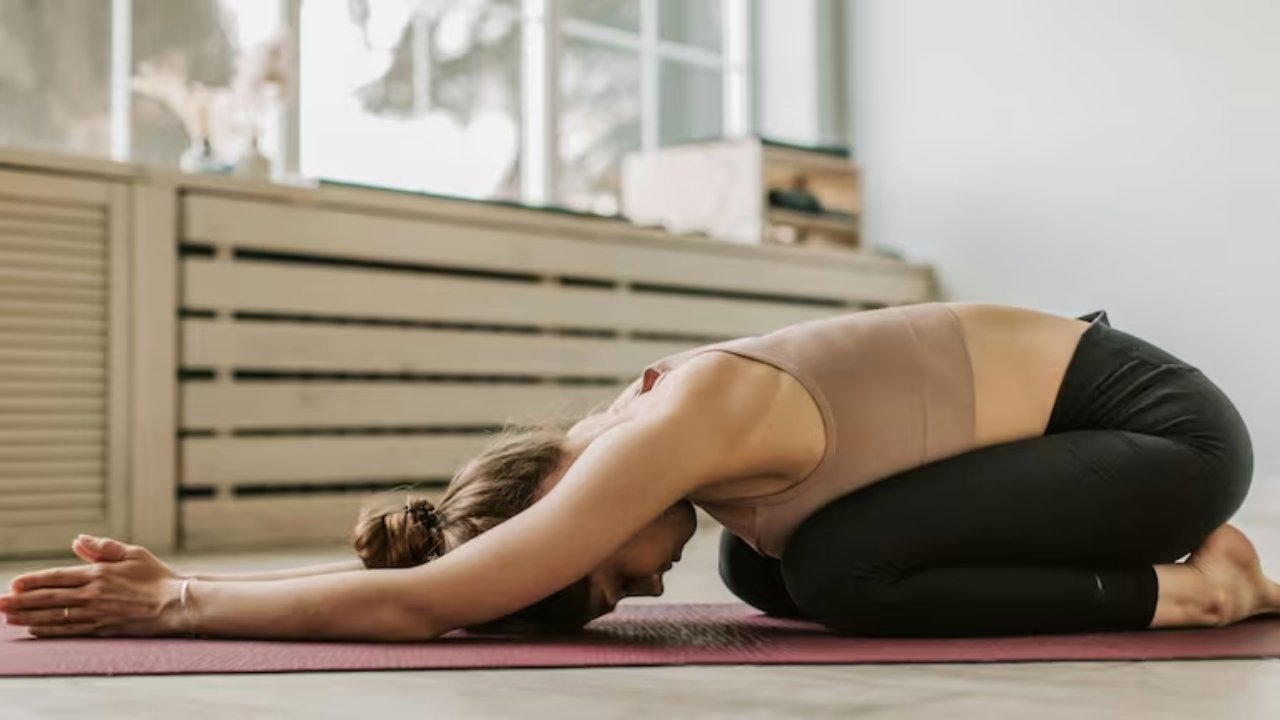
5. Childs Pose
Kneel and fold forward with your forehead down. This resting position helps relax the shoulders and upper back while calming the body.
6. Soft Forward Fold
Stand with soft knees and let your upper body hang gently. This reduces neck pressure and helps the upper back release.
7. Gentle Supine Twist
Lie on your back and let your knees fall to one side. This helps your back muscles soften and reduces overall tension.
8. Supported Bridge
Lie on your back and lift your hips gently, or use support. This opens the chest area and encourages fuller breathing.
9. Seated Deep Breathing
Sit comfortably and breathe slowly into your belly and ribs. This helps shift your body away from stress and toward relaxation.
10. Final Resting Pose
Lie still on your back and allow your body to relax completely. This gives your muscles time to settle and recover.
Small Habits That Help Alongside Yoga
Yoga often feels more helpful when paired with small daily awareness habits. Simple posture changes and gentle breathing during the day can prevent tension from building in the neck and shoulders.
- Relax your jaw often
- Lower shoulders away from ears
- Sit with back supported
- Take slow deep breaths
- Move every hour briefly
These easy habits may seem small, but they can reduce daily muscle strain and help your body stay more relaxed before tension grows into stronger discomfort.
How These Poses Help the Body
Gentle stretching and slow breathing help release tight muscles that often build up from stress and long sitting. This reduces pressure patterns that may travel upward toward the head.
| Area Affected | Benefit |
|---|---|
| Neck muscles | Reduce upward tension |
| Shoulders | Release tightness |
| Chest | Improve breathing space |
| Upper back | Support posture |
| Breathing muscles | Calm the system |
When these areas feel more relaxed and supported, your body may handle daily stress better, which can help lower the buildup of tension linked to migraine discomfort.
A Simple Tension Reset Routine
You do not need a long or intense session to feel relief. Short, regular practice often works better because it gently interrupts tension patterns and gives your muscles frequent chances to soften and reset.
Try shoulder lifts, slow neck stretches, Cat Cow movement, Childs Pose, and calm breathing. Move slowly, stay comfortable, and avoid rushing so your body can truly release built up tightness.
Doing this short routine for just a few minutes each day can help prevent tension from building. Over time, your neck and shoulders may feel lighter and less likely to hold stress.
When to Practice
These poses can be helpful at different times, depending on how your body feels. Practicing when you first notice tightness can stop discomfort from growing stronger later.
Morning practice helps release stiffness from sleep and prepares your body for the day. Midday breaks reduce work related strain, while evening practice helps your system slow down before rest.
Listen to your body and keep all movements gentle. There is no need to push deeply. Comfort and slow breathing help your muscles relax more than strong stretching.
Common Thoughts People Have
Some people worry that movement might make migraine symptoms worse. Gentle yoga is very different from intense exercise and often focuses more on calming the body than building strength.
Others think they need to be flexible to benefit. Comfort is more important than depth. Small movements done with care often feel better than big stretches that cause strain.
Consistency is usually more helpful than intensity. Regular short sessions help the body learn to release tension, while rare long sessions may not bring the same lasting comfort.
The Simple Takeaway
Migraines are not only about the head. Muscle tightness, posture habits, and breathing patterns can all influence how your body feels during stressful or busy periods.
These gentle yoga poses support the areas that often hold tension. With steady, relaxed practice, your body may feel looser, lighter, and better supported in everyday life over time.